
In this episode of The Steadfast Podcast, Jessie sits down with Southern storyteller and humorist Landon Bryant for a conversation about emotional safety, authenticity, and the kind of family atmosphere that allows people to become secure in who they are.
This episode blends humor with meaningful reflection — exploring how connection, belonging, and relational safety shape identity and resilience.
If you are interested in secure attachment, family connection, or building emotional safety in your home, this conversation will resonate deeply.
Landon Bryant is a Southern storyteller, comedian, and cultural commentator known for celebrating community, humor, and regional identity. Through his social media platforms and live events, he highlights the beauty of belonging, hospitality, and authentic expression.
Connect with Landon Bryant:
• Website: https://landontalks.com
• Instagram: https://www.instagram.com/landontalks
• Facebook: https://www.facebook.com/landontalks
• TikTok: https://www.tiktok.com/@landontalks
• Tour Dates: https://landontalks.com/tour
We explore what it means to grow up in an emotionally safe home and how that environment shapes:
• Nervous system regulation
• Secure attachment
• Identity formation
• Conflict tolerance
• Authentic self-expression
Emotional safety is not about avoiding conflict — it is about knowing that connection will not be withdrawn when conflict happens.
When a child grows up in a safe relational environment, they internalize:
“I am safe.”
“I am accepted.”
“I can be myself.”
This becomes the foundation for authenticity in adulthood.
Without secure attachment, people often:
• Over-control
• People-please
• Split into different identities
• Avoid vulnerability
• Fear abandonment
Secure attachment allows someone to be the same person at home, at work, and in public — steady and integrated.
Laughter is not trivial.
Research shows shared humor:
• Lowers stress hormones
• Increases bonding
• Strengthens relational resilience
• Signals safety to the brain
In healthy families, humor reinforces connection instead of deflecting discomfort.
Another powerful theme in this episode is learning to feel safe even when life is not perfectly organized.
Secure attachment allows flexibility.
When someone is internally secure, they do not require external control to feel regulated.
This applies to parenting, marriage, and personal growth.
Many individuals and couples seeking counseling in Charleston struggle with:
• Anxiety and control patterns
• Communication breakdown in marriage
• Parenting from fear instead of connection
• Attachment wounds from childhood
• Feeling disconnected at home
Building a safe family atmosphere is not automatic — it is intentional.
Secure attachment can be developed and strengthened at any stage of life.
At Steadfast Christian Counseling in Charleston, South Carolina, we specialize in helping individuals, couples, and families build emotional safety and secure attachment.
Our services include:
• Attachment-based therapy
• Christian counseling
• Trauma-informed care
• EMDR therapy
• Couples counseling
• Parenting support
We work with clients who want:
• Healthier communication
• Stronger marriage connection
• More secure parenting
• Reduced anxiety
• Greater authenticity
• A peaceful home atmosphere
Emotional safety is the foundation of long-term relational health.
If you are looking for counseling in Charleston, SC, and want to strengthen connection in your marriage or family, we would love to help.
🌿 Learn more about our team and services:
www.steadfastchristiancounseling.com
📅 Schedule your free consultation today:
https://sccandcic.janeapp.com
If you’re considering couples counseling, you might be hoping for a quick fix: “teach us how to communicate and we’ll be fine.” But most couples don’t get stuck because they don’t know words—they get stuck because their nervous systems are activated, old attachment patterns show up, and the relationship starts running a familiar “cycle.”
In this episode, Jessie Evans sits down with Tiff Holdgate, LPC (Steadfast Christian Counseling) to talk about what actually makes couples therapy effective: trauma-informed care, individual self-awareness, healthier boundaries, and learning how to stay connected without becoming emotionally fused.
If you’re in Charleston (or anywhere in South Carolina) and want trauma-informed couples counseling that integrates faith-sensitive care when desired, we’d love to help you take the next step.
Couples work requires safety and stability. If there is active abuse or active addiction, the first step is safety and stabilization—not couples therapy.
Tiff Holdgate is a counselor on the Steadfast team who brings a trauma-informed lens to couples counseling, helping partners identify their cycle, build emotional boundaries, and move toward repair with greater self-awareness.
Have you ever tried to comfort your child—only to be met with “Leave me alone,” eye rolls, sarcasm, or shutting down? In this episode, Jessie Evans and Emily Coomer, LPC unpack what’s really happening beneath those reactions and how parents can respond in ways that strengthen trust, emotional safety, and secure attachment.
Emily Coomer, LPC is a counselor at Steadfast Christian Counseling who loves working with kids and supporting parents with practical, real-life tools. Emily helps families move from reactive cycles to calmer connection—without losing boundaries or authority.
Want support navigating big emotions, shutdowns, or power struggles at home? We’re here to help.
Book a free consultation: https://sccandcic.janeapp.com
Visit: www.steadfastchristiancounseling.com
For more information on this topic, check out our accompanying blog post

Becoming a parent changes everything — including what happens inside your mind and body. The perinatal period (pregnancy through the months after birth, often extending into the first couple of years) can bring up anxiety, intrusive thoughts, OCD patterns, depression, and old attachment wounds that you didn’t expect.
In this episode of The Steadfast Podcast, Jessie Evans talks with Steadfast counselor Annalise Lind talk about perinatal mental health through the lens of Internal Family Systems (IFS) — a compassionate approach that helps you understand symptoms as protective parts, not personal failure. This conversation is faith-sensitive, shame-free, and grounded in what parents actually experience.
Annalise is a therapist on the Steadfast Christian Counseling team and brings a thoughtful, compassionate approach to Internal Family Systems (IFS) work. She’s passionate about supporting parents in the perinatal period — especially when anxiety, intrusive thoughts, OCD patterns, and identity shifts make it hard to feel like yourself. Her work helps clients move from shame and fear to clarity, compassion, and grounded support.
If you’re hearing yourself in this episode — you are not alone, and you don’t have to white-knuckle it. We support clients in Charleston and across South Carolina with faith-sensitive counseling for:
Website: www.steadfastchristiancounseling.com
Book a FREE consultation: https://sccandcic.janeapp.com
One word is carrying way too much weight right now—and the confusion is hurting people.
In this episode of The Steadfast Podcast, Jessie Evans responds to a recent Gospel Coalition article (“Why Women Are Going to Therapy Instead of Church”) and explains why this conversation often gets stuck: pastoral care/discipleship and licensed clinical counseling are not the same thing. We’re not comparing apples to apples.
This episode is a practical guide for pastors, ministry teams, and care leaders who want to support people well without carrying what was never meant to be carried alone. You’ll hear why scope of practice matters, what licensure protects (education, supervision, ethics, continuing education, board oversight), and why evidence-based therapy is far more than “just talking.” Jessie also shares a personal postpartum intrusive-thoughts experience and explains why spiritualizing clinical symptoms can unintentionally increase shame—especially for those dealing with anxiety, trauma, OCD patterns, abuse dynamics, or suicidality.
We also clarify what “Christian counseling” means at Steadfast Christian Counseling: we are clinically grounded and trauma-informed, and for clients who desire it, we integrate faith ethically and client-led—guided by professional ethics and client autonomy. In other words: evidence-based therapy with a counselor who understands Christian culture and can hold the faith pieces of your story with care—without pressure or agenda.
Pastoral care can be supportive when the person is safe and the need is primarily spiritual support, encouragement, community, meaning-making, or short-term life stress.
Refer when there are signs of significant impairment, trauma symptoms, abuse dynamics, suicidal thoughts, postpartum anxiety/depression, intrusive thoughts with compulsive loops, addiction, eating disorders, or anything outside your training/scope. (Jessie shares practical examples in the episode.)
A helpful posture: “I’ll stay in your corner spiritually, and I want you to have the clinical care that matches what you’re carrying.”
Read our full guide for pastors here!
Steadfast Christian Counseling (Charleston, SC):
https://www.steadfastchristiancounseling.com
Book a free consultation (20-min video call):
https://sccandcic.janeapp.com
Join the Steadfast Friday Email Club (weekly encouragement + practical tools):
https://link.mytherapyflow.com/widget/form/Zmgwx48V1NL9CkMdudLv
Trauma-Informed Church Training (half-day staff training):
mailto:connect@steadfastcc.com
Bare Marriage Podcast (Sheila & Rebecca’s discussion of the TGC article):
https://baremarriage.com/2026/01/podcast-why-marriage-isnt-like-being-on-the-back-of-a-tandem-bike/
Follow Steadfast on Instagram:
https://www.instagram.com/steadfastchristiancounseling/
Follow Steadfast on Facebook:
https://www.facebook.com/p/Steadfast-Christian-Counseling-100088672554550/
Full Episode Transcript
Jessie Evans: Alright, what’s up everybody? Welcome back to the Steadfast Podcast. I’m Jessie Evans, owner of Steadfast Christian Counseling in South Carolina and the host of this pod. Alright. Jessie Evans: I have been fired up to talk about this for a couple weeks now, so get ready. This episode today is for the church people. We’ve got to be talking about this. Can we talk about the word counseling for a minute today? Because one word is carrying way too much weight right now and in my opinion the confusion is hurting people. Jessie Evans: So on the one hand, you might have a church that says, come to us for counseling and they use that word counseling. And then you have a licensed counselor who says, I provide counseling or a licensed therapist. Those two things are treated like they’re in the exact same category simply because they share a word. Jessie Evans: but they’re not the same. And if we don’t define the lanes, people don’t get the right kind of help. And sometimes they get harmed unintentionally. Today, I want to respond to a recent gospel coalition article titled this, why women are going to therapy instead of church. It was published on December 30th, 2025. Jessie Evans: And I also want to point you to a thoughtful conversation that Sheila and her daughter Rebecca did on the Bare Marriage podcast. I think it came out last week, first of January, but they addressed this issue with clarity and with courage. But I am going to take a slightly different angle than they did because I am a counselor. And there’s something that’s rubbing me wrong about this whole thing. Jessie Evans: And this is it. We have to stop comparing discipleship and pastoral care in church with counseling. We are not comparing apples to apples and we need to stop doing that until we admit that we are going to keep having the same until we do that. We are going to continue in these cycles of communication. Jessie Evans: in these cycles of confusion that I think we’re swimming in right now. Jessie Evans: Alright, so let’s talk about the article for a second. So the Gospel Coalition article describes an increase in women struggling emotionally and relationally and a decrease in women going to pastors or women’s ministry leaders and many of them going to therapy instead. Thank goodness for that. The author frames part of the concern as the influence of the quote Jessie Evans: therapeutic culture. Now this little phrase right here is something that I have heard now for about the last eight months from a lot of these kind of parachurch organizations, the Gospel Coalition being one of them and others, but like it’s this kind of attack on the counseling world and it warns that people may compartmentalize life into Jessie Evans: body-spirit psychological in a way that pushes God and the church to the side. She also says that it can be wise to seek therapy in addition to church care. So let me say this there. Let me say this clearly. I am NOT here. Jessie Evans: to say that pastors don’t care or that pastors are harming people intentionally or that the church is. I don’t hate the church. I love the church. I am not here to say that therapy replaces discipleship at all. It does not. And if it tries to therapy is now in the wrong lane. Jessie Evans: is practicing and that therapist is potentially practicing in an unethical way. What I am here to say is this. The question, why are women going to therapy instead of the church, is the wrong question. When we understand that those two forms of care are not the same thing, they are not. Jessie Evans: So the core. Jessie Evans: So here is the cleanest way that I can say it. Church is not therapy. Therapy is not church. Both can be good, both can matter, both can be life-giving, but they are different jobs. Jessie Evans: this is what I cannot wrap my head around over the last couple years. You know, and I mean perhaps in some like kind of really in some… This is what I can’t wrap my head around over the last couple years. I mean… Jessie Evans: I’m not gonna go. Jessie Evans: Okay, let’s talk about what pastoral care and discipleship is. So it’s spiritually focused support, prayer, Bible teaching, it’s community building, meaning, spiritual meaning making, and it is walking with someone shoulder to shoulder through suffering. Jessie Evans: Now let’s talk about what counseling is. Counseling is healthcare. It’s assessment, treatment planning, evidence-based interventions, risk evaluation, documentation, ethics, legal standards, and accountability structures. So when people say women should go to the church instead of therapy, I want to gently ask, instead of therapy for what? Jessie Evans: For anxiety disorders, they should go to counseling. For trauma symptoms, they should go to counseling. For PTSD, they should go to counseling. For postpartum intrusive thoughts, Jessie Evans: for postpartum, anxiety, depression, OCD, et cetera, they should go to counseling. For panic, they should go to counseling. Jessie Evans: For abuse dynamics, they should go to counseling. For suicidality, they should go to counseling. For intense relationship issues, they should go to counseling. Because that is not a… Jessie Evans: we have to learn about scope of practice. Jessie Evans: When we do our trauma-informed church trainings, we talk a lot about scope of practice and about this concept of the church needing to be omni-competent in all of these areas. That is not it. The church needs to… Let me not say stay in your lane because that’s gonna come out mean. Jessie Evans: The church as it cares for people well is a place to provide resources for people when they need them. Jessie Evans: scope of practice matters because people’s lives are at stake. Jessie Evans: Why? Jessie Evans: I’m going to say something that might sound intense, but I’m just tired of the confusion. I would love to see the church stop using the word counseling the way that licensed clinicians use the Use discipleship, use pastoral care, use spiritual direction, use mentoring, but the word counseling in the way the public understands it implies clinical treatment. Jessie Evans: anxiety, depression, etc. and professional accountability. Jessie Evans: So here’s why I care about the word. Because in licensed counseling, there are protections. Gotta have a graduate degree in counseling, not just have taken one class and supervised training. Gotta have a license and state regulation all over that thing. There are ethics codes and enforceable standards to that license. Jessie Evans: We have continuing education requirements. There is board oversight and formal. There’s a formal complaint process. There’s accountability for us. There are standards around confidentiality, documentation, consent, and boundaries. The things that we do in the counseling space are evidence-based, they’re data informed, and they’re tested, and they’re refined. These guardrails exist because when you sit with someone’s trauma, Jessie Evans: their marriage, their attachment wounds, their panic, their suicidality, you can help, but sometimes you can harm. And if there’s no training, if there’s no oversight, if harm gets spiritualized as faithfulness or a sin issue, and clients blame themselves when it doesn’t work, we can have a big problem. Jessie Evans: Let’s talk about the part that nobody wants to say out loud. In many church counseling relationships, there is no standardized training. Jessie Evans: There’s no regulated scope. There’s no clinical supervision. There’s no documentation standard. There are no mandated. There’s no mandated competence in trauma, abuse, or suicide risk. There’s no ethics. There is no ethics board to investigate harm. And often there is also a power differential that makes it very hard for somebody to say, Jessie Evans: makes it very hard for someone to say this is not helping me. Even well-meaning helpers can accidentally misread drama responses as rebellion. Jessie Evans: mishandle abuse disclosures, intensify shame, confuse intrusive thoughts with sin, turn complex mental health conditions into pray harder problems. Jessie Evans: And when the helper is convinced that they’re doing biblical counseling, the client often doesn’t just feel like they’ve failed counseling, they feel like they have failed God. Jessie Evans: I must not be a good enough Christian. The myth that counseling is just talking is another myth fueled by this confusion. It’s the idea that therapy is just talking. It’s just venting. But evidence-based therapy is not just talking. It’s skills, tools, treatment plans, interventions. Jessie Evans: Even when therapy includes talking, the talking is doing something. It has a purpose. Helping the nervous system regulate, restructuring beliefs and shame narratives, building distress tolerance, processing a traumatic memory, learning boundaries and understanding secure attachment, interpreting compulsions and avoiding Jessie Evans: and avoidant interpreting compulsions and avoidant cycles. Practicing new responses in real time. Therapy is often less like a chat and more like physical therapy for the mind and the nervous system. So much in my own therapy. I am learning about how much my body holds and how to understand that. It is not just a cognitive process. Jessie Evans: So I’ll add a little personal piece here. I remember being a new mother and dealing with intrusive thoughts, which we’re going to talk about a little bit. I think in the next couple of weeks, Annalise and I are going to talk about that perinatal period. But an intrusive thought is like a disturbing unwanted thought that feels terrifying and it just pops into your head. And for a lot of new moms, this is an experience that they go through. And it… Jessie Evans: be very misunderstood and it can be something that new moms do not want to talk about because they are really afraid of the image that just popped into their head but in reality this is a symptom of anxiety and perhaps OCD which OCD is under the anxiety disorder umbrella so Jessie Evans: What I needed in that season was someone who understood what intrusive thoughts are, how common they can be in postpartum. I needed somebody to normalize that for me. How anxiety and OCD can show up and what actually helps. But what is so common in Jessie Evans: religious spaces when someone brings up this type of thing is some version of this. Pray more. Possibly repent. Just stop thinking about it. Stop entertaining that. Don’t give the enemy a foothold. Jessie Evans: worship music and I’m not saying that playing worship music and prayer is bad. I’m saying that those responses did not address what was happening did not address what was happening clinically for me and sometimes those types of responses can add shame to the fear that a person is experiencing. Jessie Evans: we have to stop pretending that these types of things are in the same lane. Jessie Evans: I think about stories that I’ve heard countless stories of women who have suffered with anxiety and have been told that their faith just wasn’t strong enough. And this really happens. Or have been shamed away from taking anxiety medication. This actually happens y’all. And it’s a problem. Jessie Evans: Okay, so let’s talk about the OCD example for a second because this is a perfect apples, like not apples to apples illustration. So you’ve heard stories same as I have people dealing with OCD. I just talked a second about intrusive thoughts which can be a part of that OCD cycle. So when an intrusive thought enters your mind, so Jessie Evans: This is something that I have legitimately heard close to first hand. This is something that I have, a report that I’ve gotten of things that have been said in religious spaces. the advice that was given was, when an intrusive thought enters your mind, chant a verse. So I want to be really clear here. Jessie Evans: that is not evidence-based OCD treatment and it can make your symptoms worse and here’s why. So one of the most effective research supported treatments for OCD is exposure and response prevention ERP which works by breaking that cycle. So in an OCD we call them OCD cycles we have Jessie Evans: obsession that’s the O and a compulsion in that cycle and so the obsession can be the intrusive thought that just pops in right and then a person does a compulsion in an attempt to kind of neutralize the anxiety that they feel from that like intense thought and that keeps a person by completing that cycle Jessie Evans: the obsessive and then the compulsive piece together complete the cycle. Jessie Evans: that relief that the compulsion gives the person is very momentary but it reinforces that cycle. So when someone says to neutralize an intrusive thought chant a verse Jessie Evans: you essentially are handing that person a compulsion. A ritual meant to reduce the stress and gain certainty. That’s the definition of what that is. So it teaches the brain that thought was dangerous. I must do something to make it go away. Jessie Evans: Relief only comes after I perform the ritual. That is a picture of an OCD loop right there. And even broader than OCD, trying to forcibly suppress thoughts, it really rarely ever works, thought suppression can increase the frequency and intensity of intrusive thoughts. So the International OCD Foundation has also written about Jessie Evans: some psychological interventions can be ineffective and potentially harmful for OCD because they miss the actual mechanism of the disorder. So a kind person can be trying to help and still accidentally intensify symptoms because they aren’t trained to assess, diagnose, and treat OCD. And even within our counseling world, Jessie Evans: I want to make it very clear that we all ethically practice within our scope. So if you are not as a counselor trained specifically to treat OCD, then you also should be referring this person to another person who has the skill and the training to treat this particular thing. Same with a lot of different things, disordered eating, Jessie Evans: addiction. There’s some very specialized training out there even within our work that as we practice ethically we are saying I’m not the person for you because I’m not trained in this. However, I’m to give you a couple of referrals here to some people in town who can help you. This is ethically practicing within your scope and it is very important to do that. Jessie Evans: I want to say that. Jessie Evans: This is a training issue. It’s not a character flaw. Learning about practicing within scope didn’t happen until I went to counseling school and I learned about lanes and boundaries and practicing within my scope and within my training and the responsibility in that. Right? It’s the same in the medical world. You know, like I don’t want to go see someone if I have a knee issue who is not like a specialist in that area. Jessie Evans: right? I’m not going to go see an ENT for like a knee issue, you know? It’s the same in this world and that is how we practice ethically. Okay. Jessie Evans: So this is something that’s just come up in last little bit in Texas. Jessie Evans: I want to. Jessie Evans: I want to zoom out a little bit. One reason that I’m so passionate about this is the same confusion is it’s showing up in policy decisions. It’s showing up across the board here in Texas lawmakers passed SB 763 and that allowed schools to use funds to employ unlicensed Jessie Evans: chaplains in roles connected to student support including mental health related functions depending on local policy. So reporting and advocacy toolkits have raised concerns that chaplains are not held to the same education certification and training standards as school counselors. School counselors the same as licensed counselors they do all of the training Jessie Evans: In some states they have to teach also in the school for a time, but someone who is a school counselor has an undergraduate degree in education most likely and then has a graduate degree in counseling. For me the difference in a school counselor and what I do as an LPC is I think I took a couple of extra classes only. Jessie Evans: in I think one was in the DSM I can’t remember what the other one was but my it it it was not my my entire graduate degree is the same one that school counselors get most school counselors can sit for the the NCE national counseling exam and they have the requirements to do that. Jessie Evans: not all school counselors are licensed counselors. That’s a choice they can make but the schooling is very similar. So multiple reports note that training requirements can vary widely because school districts set the standards. Jessie Evans: So some of these like vendors that would train these chaplains, they promote apps that connect users to chaplains via chat video and they include mental health and emotional well-being resources. Whether someone loves or hates that legislation, here’s the point for what we’re talking about today. Jessie Evans: We keep trying to treat spiritual care and clinical mental health care as interchangeable, and they are not. Jessie Evans: I want to take a second and talk about what, like why do we even have this name, Steadfast Christian Counseling, and what does that even mean? Jessie Evans: I want to speak directly to our community because this is where people can get confused about us at Steadfast and what we do. So at Steadfast Christian Counseling, here’s who we are. We’re clinically grounded. We’re trauma informed. We’re evidence-based. Period. Period. Period. And for clients who desire it, we thoughtfully and ethically integrate faith in a client-led way. Jessie Evans: We do not impose beliefs. We do not force religion. We are guided by professional ethics and client autonomy. I want to pause right there. Jessie Evans: you do not have to be a person of the Christian faith to come and get counseling here. In fact, we’ve had many clients over the years who are not Christians. The only time that faith will ever enter the space and discussion around faith or anything is when the client leads in that way and what that can look like might be as I am Jessie Evans: unpacking my story. There may be parts of that that come up and we’re going to get into the detail of what that looks like here in just a second. Jessie Evans: So what makes working with a Christian counselor helpful? Jessie Evans: especially if you come from Christian culture. It’s not that we are going to preach at you. We are not. It’s that we understand your language and your world. We understand the phrases that you’ve heard. We understand the power dynamics that you may have experienced. We understand the shame, the fear that can get layered into theology. We understand the grief. Jessie Evans: of spiritual disillusionment, we understand the complexity of loving Jesus and needing trauma treatment. Jessie Evans: We understand lots of layers. We understand the language. We understand the lingo. We also understand that for people of faith, part of their secure attachment journey is understanding their secure attachment to God. And we are here to help you navigate all of that as you unpack your maybe less than secure attachments. Jessie Evans: your relationships with your parents, your friends, your spouse… those two things… those insecure relationships that you have for a person of faith in therapy, somebody who has been brought up in this… in the culture of the Christian faith, somebody who is a… who has a… whose faith is deeply important to them. Jessie Evans: We want to provide a space where you’re free to talk about that stuff if you want to. This is a completely safe space to wrestle and to acknowledge your faith. You don’t have to hide it. And we want to provide that here. Jessie Evans: So for many clients, it is deeply healing to sit with somebody who can hold all of that stuff for you. So we can hold your clinical reality, your nervous system, your diagnosis, your symptoms, your story. Jessie Evans: And we can hold spiritual context. Your faith, your church background, your church experiences, meaning around that, grief, hope, we can hold all of that without coercion. That is what a true counselor who is a Christian is, or a Christian counselor, which is what we provide here for those who want it. Jessie Evans: Our logo is a cross with roots. You might have seen it. It’s the T instead of S. And what we do here, in my opinion, as the owner of this place, what I want the ethic of this place to be is to fall in line with the teaching of Jesus. I’ve talked a lot over the last year about the Sermon on the Mount. Jessie Evans: And. Jessie Evans: much that shaped me and I want so much for this environment to feel safe for everyone who comes in the door. There’s no leveling here. There’s… there is… we’re all on an equal playing field. No one’s gonna change anyone’s identity or try to. Everyone’s welcome. Jessie Evans: Everyone’s Everyone’s left here. Bring your suitcase on in and unpack with us. No matter what your background is. Jessie Evans: I I’m just kind of pivoting back to this conversation. One of the deeper things over the last year is I’ve thought about this a lot and I’ve kept hearing this like comment of like therapeutic culture and sort of this attack on what I’m trying to do in the world, which I think is give people a space to heal and be more free, which I think is a good thing. And my faith informs me that it’s an important thing. Jessie Evans: just keep getting hit with this question of like why does it seem like the church at large discourages therapy or is opposed to it and I’m just gonna throw out like I mean I don’t know I would be interested to hear what you think and what you’ve seen but Jessie Evans: I’ll throw out some things that maybe have come to mind, that have come to mind for me. Jessie Evans: I think when we look at like, you know, recent church history maybe, I think there are a lot of cases where we see theological suspicion of like secular frameworks. I can’t tell you how many times like I’ve had to talk to church people and say like, and really make a case that all of these psychological tools are God’s tools. Jessie Evans: there’s a real fear of that. Some fear that therapy will replace like Jessie Evans: scripture or minimize sin and responsibility which is not the case and I mean I think a sadder truth is that in some environments outside help threatens the control of leadership in some unhealthy environments where there’s kind of a power dynamic Jessie Evans: kind of a structure of authority in place. When people go to a counselor outside of that structured authority and they start kind of untangling and they start seeing their spaghetti strands laid out and they start feeling more agency to make choices in their life in some unhealthy environments that can be really threatening. It be threatening to the bottom line if it’s a really unhealthy environment. Jessie Evans: where you know there’s a financial piece involved as well. So I choose to believe that that is not the case like in most situations but I’m not naive to the fact that it certainly exists. I mean we live in a time when media exposes things all the time and Jessie Evans: So we know that these things do happen. Jessie Evans: in those environments where you know there is kind of an authority structure in place, accountability is not really favorable. Jessie Evans: So, again, I’ve mentioned this before, I’ve mentioned this this reason, but I think mental health struggles can be viewed as spiritual failure instead of a human experience that requires clinical care. I think that is hopefully kind of phasing out as we go generation to generation. But when I think of my mom’s generation, I mean, I think those people carried a lot of stuff. Jessie Evans: that they really didn’t need to. Jessie Evans: And again, like I’ve said this already three times in this new, like I said new, but in the second half of this season and I’ve said it before, but so many people think therapy is just talking or just like paying somebody to agree with you. Which I just want to kick that one off. I don’t know. Let’s get rid of that one. Jessie Evans: I think that some leaders genuinely want to be present and they want to help and they don’t realize what they’re stepping into clinically. And I mean to be fair, the Gospel Coalition article itself suggests that churches train lay leaders and widen care in partnership with counselors and psychiatrists. And so I agree with that. Jessie Evans: would and this is something that we do at steadfast like we love to go in and train churches in clinically informed care in scope of practice we love to give people like a kind of a little triage sheet of like thinking through like is this in my scope is this out of my scope okay when refer refer for what for what we want to have we want to give people a plan Jessie Evans: We want them to have a structure in place. We want them to know in our city their resources that are available. And guess what? It’s not just Steadfast. We’re one of many great counseling centers in the city. There are lots of resources for people. And so also as the daughter of a pastor, I want to free up church leadership from feeling like they have to hold this burden. Jessie Evans: So really, and that’s one thing I think I learned just coming into this counseling degree and learning scope of practice for myself. Like it’s so freeing to not have to be everything to everybody. Like I know what I can do well. I do that. And there’s other people in the world in this city that do things that I can’t do. And we work together as a team to me. That’s we, we talk about the body of Christ. Like that’s it. Like let the church be the church and the broad church and let’s like, Jessie Evans: take care of each other and the people in this city but we’ve got to be connected in order to do that. So I guess I want to put a plug in for that right now. If you are listening to this and if somebody sent this to you and you’re listening to it we’d love to come and train your staff to see Melis. Connect at steadfastcc.com and we will get you scheduled. We’ll come out for a half day. Jessie Evans: and take you through our trauma-informed church training and you’ll leave feeling a lot more prepared or will leave with you feeling a lot more prepared I should say. Jessie Evans: So just coming back to this gospel coalition article, I think the healthiest path forward is can we just stop with the church versus therapy narrative? Can we just stop with that? I love the therapeutic culture that we’re in. I love the fact that people are unpacking their suitcases. I love the fact that like I see… Jessie Evans: emotional awareness in my 10 year old that I definitely did not have at 10. I love it. People are not suppressing things. People are thinking through things. I love this time. Let’s embrace it because I do think we were created for such a time as this. Let’s move to clarity, collaboration, humility about scope, please. Jessie Evans: in all categories. I can tell you that for my clinic we aren’t stepping outside of our lane and doing spiritual mentorship. We’re here providing clinical care and faith enters the space only when the client wants that and to the degree. There is no directing happening here. Jessie Evans: Alright, I’m going to end with the sentence I wish we could all agree on. Words matter because they shape expectation. I’m tired of seeing people harmed by the confusion. Church care can be beautiful. I was raised in a church. My dad was a pastor. Discipleship can be powerful. Jessie Evans: Pastoral presence can change lives. I’ve seen it firsthand guys. I grew up with a pastor dad Who still pastors to this day? Jessie Evans: what I mean. I don’t mean he’s the head of a church when I say that. Pastor is not position. Pastor is a gifting. Clinical counseling should mean licensed, trained, supervised, accountable healthcare. It’s not apples to apples. Jessie Evans: So as we’re landing the plane here, if you’re in Charleston, you are looking for clinically grounded trauma informed counseling, and you want a therapist who understands Christian culture and can integrate faith ethically in a client led way. We are your crew and we love to support you. So go over to steadfastchristiancounseling.com. Go ahead and schedule a free consultation. Jessie Evans: Those are just 20 minutes video call, no strings attached, and you can see if we’re a good fit for you right there. If you need any further assistance or would like to create promotional content for this episode, let me know!
Welcome back to The Steadfast Podcast — and welcome to 2026. The first few weeks of the year often feel like reentry: stepping back into routines, work rhythms, school schedules, and “real life” after the holidays. In this episode, Jessie Evans shares why she loves a reset — organizing, planning, taking inventory — and how a gentle approach to goals can bring clarity without pressure.
Then the conversation takes a meaningful turn: Jessie’s 10-year-old daughter describes a “glow up” as simply being comfortable in your own skin. That one phrase opens up a bigger reflection for all of us: What would it feel like to live with more freedom to be yourself? And if something inside immediately tries to rein you back in, what is that part protecting?
In this episode, you’ll hear Jessie explore:
One of the biggest misunderstandings about therapy is that it’s simply venting for an hour. At Steadfast, we believe counseling is much more than talking — it’s a structured, professional process that helps you understand patterns, find relief, and build tools that actually work in real life.
Sometimes, “talking it all out” too quickly can even feel activating. A trauma-informed therapist knows when to slow down, when to lean in, and which approach is best for what you’re carrying.
At Steadfast Christian Counseling, our clinicians are trained in evidence-based and trauma-informed modalities such as EMDR, Brainspotting, Internal Family Systems (IFS), CBT, and more. We tailor treatment to the person in front of us — not a one-size-fits-all plan.
Steadfast Christian Counseling (Charleston, SC) is a clinically grounded, trauma-informed practice that offers ethical, professional therapy. We are evidence-based. And for clients who desire it, we thoughtfully integrate faith in a client-led way — guided by professional ethics and client autonomy.
If you’re feeling stuck, overwhelmed, anxious, burned out, disconnected from yourself, or navigating relationship strain, therapy can be a supportive place to regain steadiness and move forward with clarity.
If you’re considering counseling in Charleston, SC, we’d love to help you get connected with the right therapist.
Visit: www.steadfastchristiancounseling.com
Book a free consultation: https://sccandcic.janeapp.com
Want weekly encouragement, practical tools, and updates from Steadfast?
Join the Steadfast Email Club:
https://link.mytherapyflow.com/widget/form/Zmgwx48V1NL9CkMdudLv

Episode Summary In this birthday-week reflection, Jessie shares why the most powerful gift we can give our kids and spouses is a commitment to unpack our stories—again and again. Through an IFS and attachment lens, she explains how our unhealed parts shape the way we show up in our homes, how repair creates safety, and […]

Episode — “Hotwired Connection: What Gossip Reveals About Us” Episode Summary “Common enemy intimacy,” as Brené Brown calls it, is when we bond over who we dislike. It gives us a false sense of connection that doesn’t last — and Jessie is diving deep into why it’s so tempting, what it does to our relationships, […]
Three Steadfast Counselors unpack the album through the lenses of Internal Family Systems and attachment. Summary Steadfast counselors Jessie Evans, Emily Coomer, LPC, and Annalise Lind explore Life of a Showgirl through an IFS and attachment lens. From the piano-only opening of “Eldest Daughter” to stacked harmonies that feel like parts “singing together,” we trace […]

When life feels overwhelming, many of us start to wonder if we’re too much. Too emotional, too sensitive, too intense. In this heartfelt episode, Charleston therapist Jessie Evans, M.Ed., LPC, and host of The Steadfast Podcast, helps listeners explore the tender inner part that believes “I’m too much.” Through faith, Internal Family Systems (IFS) therapy, […]

Subtitle Practical tools from CBT and somatic therapy to help you restore calm, one breath at a time. Description In this short but powerful episode, Jessie from Steadfast Christian Counseling in Charleston, SC, shares how to train both your mind and body to find calm on purpose. Drawing from cognitive behavioral therapy, somatic regulation, and […]
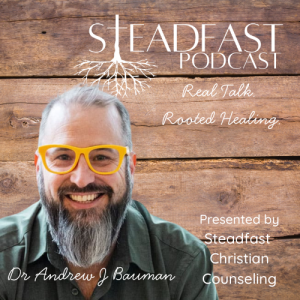
Episode summary Counselors Jessie Evans and Tiff Holdgate sit down with therapist and author Dr. Andrew J. Bauman to talk about his book Safe Church and the hard, hopeful work of making churches safer for women and survivors. Andrew shares parts of his story, what his research with ~2,800 women working in churches reveals about […]
In this episode of The Steadfast Podcast, Jessie Evans, founder of Steadfast Christian Counseling, dives into a common but unspoken pressure many ministry leaders, therapists, and helpers face: the myth of omnicompetence — the belief that we should be able to meet every need, solve every problem.
In this episode, founder of Steadfast Christian Counseling shares the story behind the practice and the values that drive everything they do. You’ll hear about the personal roots of Steadfast, the need for trauma-informed care in the church, and what makes this counseling center in Charleston, SC so different.
In this episode, Jessie and Tiff unpack the meaning of deconstruction and trace its roots—not just in modern culture, but in the pages of Scripture. From Jesus challenging legalism, to Job questioning suffering, to Peter unlearning religious boundaries, the Bible is full of faithful people who wrestled with what they were taught—and encountered God in the process.
In this episode of The Steadfast Podcast, Jessie Evans unpacks what Christian counseling really is—and what it’s not. If you’ve ever wondered whether therapy can align with your faith, or if it’s okay to ask for help, this conversation is for you. Learn how faith and clinical care can work together to bring healing, hope, and deeper connection to both God and yourself.
All right. Well, thanks for joining us today on the steadfast podcast. I’m here with three of our therapists from the team at steadfast and we’re just going to be talking today about what to do when something bad happens. Like how do we care for ourselves? How do we parent through those types of things?
In this episode of The Steadfast Podcast, Jessie is joined by Steadfast therapists Annalise Lind, Emily Coomer, and Tiff Holdgate to explore one of the most healing—and often overlooked—parts of building secure relationships: repair.
This episode is a dual drop between Pastor Chips podcast and ours! Find more about Pastor Chip Judd here Podcast — Chip JuddFor more resources, blog posts, and information about counseling services, visit us at www.steadfastchristiancounseling.com. Whether you’re looking for therapy, support for your church or school, or helpful tools for emotional and spiritual growth, Steadfast is here to walk with you.
Three Therapists diving into Imposter Syndrome while drinking coffee and failing at Facebook Live. What could be better!
In this episode of the Steadfast podcast, Jessie Evans shares exciting announcements about the launch of Charleston Integrative Counseling and a women’s retreat. She emphasizes the importance of therapy frequency, explaining how consistent sessions can lead to better mental health outcomes. Jessie discusses the two phases of therapy: the working phase, where clients build emotional strength through regular sessions, and the maintenance phase, where they focus on sustaining their progress.
In this conversation, Benton Campbell shares his experiences navigating the challenges of sobriety during the holiday season. He discusses the importance of setting boundaries, finding support, and creating an escape plan to maintain sobriety while being around family and friends. The conversation emphasizes the need for self-care and the realization that others may not be as concerned about one’s sobriety as one might think.
In this conversation, Benton Campbell shares his personal journey of overcoming alcoholism, detailing the struggles he faced and the pivotal moments that led him to seek help. He emphasizes the importance of community support, the role of faith in his recovery, and the transformative power of vulnerability and connection with others.
In this episode of the Steadfast Podcast, trauma therapist Jessica Howell discusses the concept of trauma triggers, particularly in the context of the holiday season. She explains how trauma triggers can manifest in everyday situations and emphasizes the importance of recognizing physical signs of being triggered.
In this episode of the Steadfast Podcast, Tiff Holgate discusses the emotional challenges many face during the holiday season, particularly those with trauma histories. She emphasizes the importance of recognizing trauma responses, setting boundaries, and managing emotional wellness.
In this episode of the Steadfast Podcast, Jessie Evans discusses the importance of staying present and connected with family during the holiday season. She emphasizes the need for mindfulness, setting intentions, and establishing healthy boundaries to navigate social pressures and emotional challenges that arise during this time.
In this conversation, Coach Stephanie Yelton shares her profound journey through grief and the impact these experiences had on her life and career. She discusses the ongoing nature of grief, the importance of counseling, and the process of creating a new normal after loss.
In this episode of the Steadfast podcast, host Megan Cannon discusses the critical importance of brain health and introduces the Bright Minds model developed by Dr. Daniel Amen. The conversation covers various risk factors that can affect brain function, including blood flow, mental engagement, inflammation, genetics, head trauma, toxins, mental health, immunity, hormonal issues.
In this episode of the Steadfast Podcast, Tiff Holdgate, one of our trauma therapists at Steadfast Christian Counseling, discusses the complexities of PTSD, its symptoms, and the importance of seeking help. She explains how PTSD can affect individuals differently and emphasizes that it is a treatable condition. The conversation also highlights the significance of finding the right therapist and the resources available for those struggling with PTSD.
In this episode of the Steadfast Podcast, host Jessie Evans discusses the importance of building strong connections with teenagers through understanding attachment theory and practical strategies. She emphasizes the evolving nature of the parent-teen relationship, the significance of emotional safety, and the need for parents to model emotional regulation.
In this episode, Jessie Evans discusses the importance of emotional attunement in parenting and how it relates to recognizing and managing anxiety in children. She explains that emotional attunement involves being aware of your child’s feelings and responding in a way that shows understanding and care.
Welcome to The Steadfast Podcast, where we dive deep into the intersection of mental health, faith, and well-being. In this episode, we’re continuing our exploration of anxiety, focusing on how hormonal changes related to premenstrual syndrome (PMS) can significantly impact your mood and anxiety levels.
In this episode, therapist Jessie Evans discusses anxiety and its impact on the brain, body, and emotions. She explains that anxiety is a natural response that has evolved to protect us, but when it becomes chronic or triggered by non-threatening situations, it can lead to anxiety disorders. Evans explores the role of the amygdala, neurotransmitters, and stress hormones in anxiety.
Jessie and Tiff discuss their Trauma Informed Church Training, which consists of two parts: a psychoeducational section and a practical section. They emphasize the importance of creating safe church policies and gaining self-awareness as church leaders. They also discuss the concept of trauma and how it can lead to strength and growth. They caution against spiritual bypassing and encourage sitting with discomfort and listening to others’ stories.
Join Annalise and Jessie for Part 3 of The Steadfast Family as thy explore the concept of family connections through the lens of attachment theory, discussing the various attachment styles and their impact on family dynamics. Practical tools for fostering emotional security and responding to children’s emotional needs are also discussed.
Listen in on this fun conversation and grab talking points to bring up with your family after you watch Inside Out!
If you’re feeling overwhelmed by the constant struggle to connect with your kids and build a secure attachment, then you are not alone! Maybe you’ve tried various parenting techniques, but you’re still finding it challenging to create a strong emotional bond with your children. Instead of feeling the warmth of a secure attachment, you might be experiencing frustration and a sense of disconnection.
This is Part One of our Three Part Series on building an emotionally steadfast family. Discover the surprising truth about how attachment styles shape our family connections. Uncover the unexpected impact of early interactions on emotional resilience and relationship outcomes. Stay tuned to learn how understanding your attachment style can transform your family dynamics and create hope for a healthier future.
Discover the unexpected truth about how domestic abuse impacts everyone, regardless of background or location. Click to find out how you can be a part of the solution and support those in need. Stay tuned for more eye-opening insights.
Does it feel like you’re constantly struggling to cope with the ongoing trauma of your child’s medical journey? You’ve probably been told to just stay calm and remain stable, right? But let’s be real, that advice doesn’t address the deep pain and struggle you’re feeling. It’s time to break free from the ineffective coping strategies and find real support
If you’re feeling lost and overwhelmed by your internal emotions, longing for a deeper connection with yourself and others, but not sure where to start, then you are not alone!
Do you want to help your young athlete build mental resilience and confidence on and off the field? Let’s dive in and discover the tools to support your young athlete’s mental well-being and success.
Coach Yelton is a seasoned leader with 28 years of experience in the coaching world, having coached at various esteemed institutions such as Wingate, Wake Forest, Ohio University, Boston College, Charleston Southern University and now at The University of West Florida. Her accolades as a coach, emphasizing on nurturing champions rather than just winning titles, highlight her commitment to effective leadership.
Meet Uriah Gilford, MFT, a licensed marriage and family therapist and the mastermind behind Productive Therapist, a virtual assistant company dedicated to supporting therapists in private practice. Uriah’s expertise extends beyond traditional therapy, as he seamlessly weaves his tech-savvy, minimalist lifestyle and business development enthusiasm into his work. His book, “The Productive Practice,”
Have you heard the myths about self-care and community service? Myth 1: Self-care means taking time away from others. Myth 2: Self-care is all about indulgence and relaxation. Myth 3: Self-care is a solitary activity. But what if I told you that serving the community is the ultimate form of self-care? I’ll share the truth in a compelling hook. Stay tuned!
Whitney Owens is a counselor and group practice owner in Savannah, Georgia. With over a decade of experience, she has established herself as a prominent figure in faith-based counseling. Managing a private pay group practice with 15 clinicians, Whitney’s expertise extends to providing business coaching services to practice owners nationwide. Additionally, she hosts a weekly podcast and a membership community for faith-based practice owners.
If you’re feeling overwhelmed by the challenges of parenting, and you find yourself constantly struggling to understand and connect with those you care for, then you are not alone! The traditional approaches to parenting and caregiving may not be yielding the results you desire, leaving you feeling lost and unsure of how to provide the support these children truly need.
Hey there, social workers and mental health professionals! Have you heard the myths about attachment styles and their impact on relationships? Myth 1: Attachment styles are fixed and unchangeable. Myth 2: Only insecure attachment styles have negative effects on relationships. Myth 3: Attachment styles only develop in childhood and cannot be influenced in adulthood.
Want to create a cohesive team with unwavering trust in your leadership? Yearn for authentic connections and resilience in your workplace? I’ve got the solution for you to achieve just that.
If you’re feeling trapped by the weight of unexplainable sadness and experiencing a sense of hopelessness in your battle with depression, then you are not alone! The struggle to step out of your comfort zone, like the feeling of being unable to step out of a screen door, can be paralyzing. It may seem like there’s no way out, and you may even feel like you’re losing the battle against your own thoughts.
In this episode, we debunk these myths and reveal the truth about the power of vulnerability in self-care. Discover how vulnerability can actually be a strength and a catalyst for growth.
Does this sound familiar? You’ve been told that to be an effective leader, you need to focus on making decisions and setting boundaries. But deep down, you know you want to have a more meaningful impact and connect with others in a more authentic way. The pressure to constantly have all the answers and maintain a facade of strength is leaving you feeling isolated and overwhelmed. It’s time to break free from this cycle and discover the true power of intentional influence in leadership.
Passionate therapist Emily Coomer challenges the status quo by advocating for early intervention in therapy for children and trauma populations, striving to break the cycle of generational trauma and create a brighter future for families.
If you’re feeling overwhelmed and exhausted from trying to pour into others without taking care of yourself first, then you are not alone! Despite your efforts to stay strong and keep pushing forward, you may be experiencing burnout and a lack of joy in your work. You may already be trying to find time for self-care, but finding it difficult to prioritize yourself amidst the demands of your leadership role.
In a world of unexpected twists, Tiff Holdgate’s journey into emotional maturity took a dramatic turn. It all began with a call to advocate for a vulnerable teenager, propelling her into a harrowing reality she never saw coming. But what unfolds next will leave you inspired and eager to discover how this challenging experience transformed Tiff’s life forever.
In this episode of the Steadfast Podcast, host Jessie Evans opens up about her personal journey towards embracing vulnerability and doing the inner work required for effective leadership. She shares her struggles with perfectionism, the balancing act of motherhood and entrepreneurship, and the importance of sitting with discomfort rather than avoiding it.
Welcome to the Steadfast Podcast. Join me, Jessie Evans, psychotherapist and owner of Steadfast Christian Counseling, as I delve into the art of self-kindness and resilience, inviting you to embark on a journey of self-discovery and compassion. Each week, my guests and I will share valuable insights on the significance of prioritizing self-kindness and its ability to create a ripple effect on community service.